


£3,000 Trading Allowance: What It Means…

Email Deliverability Tools for Bloggers: Free…

Redbubble vs Printify: Which Print-on-Demand Platform…

TikTok Shop Affiliate in the UK:…

How to Spot a Good Black…

Top 10 Best SEO Tools for…

YouTube Shopping Affiliate in the UK:…

Shopify Canvas Explained: Can UK Beginners…

Vinted vs eBay in 2026: Fees,…

Top 10 Best Email Tools for…

Top 10 Website Builders in the…

Top 10 Scheduling and Productivity Tools…
For Zoom and Teams calls, prioritise clear close-up speech, a reliable USB connection, an easy mute control and a size that works on your desk. A headphone socket on the microphone matters more if you also record podcasts, voiceovers or videos.
All prices were rechecked at named UK retailers on 20 Nov 2026, and Black Friday prices can move, so check before you buy. These are ten numbered picks by use case, not a measured sound ranking: MyHotips did not compare how the microphones sound.
Quick Overview
- First check whether you need a new mic at all. Fix the part of your calls that is actually poor.
- Zoom and Teams already apply noise suppression, so check those settings before you buy.
- Small desk: the RØDE NT-USB Mini. Hardware controls: the Sennheiser Profile USB-C, both £75 at Thomann.
- Noisy room: a dynamic mic such as the Shure MV6 Gen 2, or the cheaper Audio-Technica ATR2100x-USB at £79.
- Calls plus podcasting: the Shure MV7+, which is on Zoom's certified hardware list.
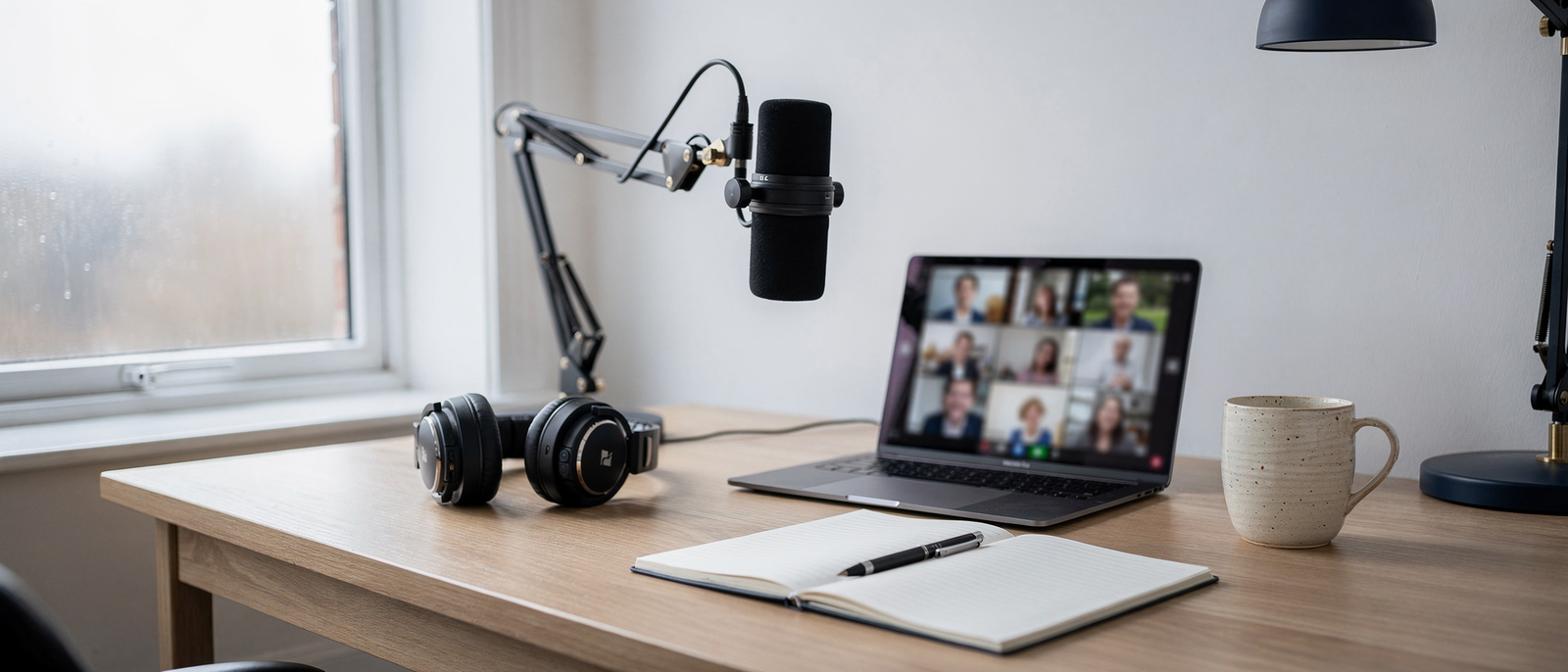
Do you actually need a separate microphone?
Keep your current setup if
Colleagues already hear you clearly, your laptop or headset mic is stable, calls are your only use, and you do not record content. A new mic would not fix a problem you do not have.
Consider a USB mic if
Your voice sounds distant or thin, you also record courses, podcasts or videos, the mic can stay in position on your desk, or you want better hardware controls such as mute.
Consider a headset instead if
You move around during calls, you work in a noisy shared room, you want speaker and microphone in one device, or a large desk microphone would be awkward.
Consider wireless if
The real problem is video creation away from the desk. A wireless clip-on system is covered at the end of this guide.
Best microphones for Zoom and Teams at a glance
Prices rechecked on 20 Nov 2026 and listed as shown, with VAT included. Most come from Thomann UK, whose UK shipping table lists £8.90 standard delivery on orders below £149 and free delivery from £149, so the delivered price is higher for the cheaper mics. CVP lists free standard delivery on qualifying UK orders over £50, with exclusions for some remote areas. Confirm delivery at checkout.
| Need | Pick | Type and connection | Price (as listed) | Delivered if bought alone |
|---|---|---|---|---|
| Lowest-cost bundle | t.bone SC 420 USB Desktop-Set | Condenser, USB | £49 (Thomann) | about £57.90 |
| Small desk | RØDE NT-USB Mini | Condenser, USB | £75 (Thomann) | about £83.90 |
| Budget dynamic | Audio-Technica ATR2100x-USB | Dynamic, USB-C and XLR | £79 (CVP, backorder) | free over £50 for most UK addresses |
| Hardware controls | Sennheiser Profile USB-C | Condenser, USB-C | £75 (Thomann) | about £83.90 |
| Podcast-style recording | Audio-Technica AT2020USB-X | Condenser, USB | £109 (Thomann) | about £117.90 |
| Onboard processing | RØDE NT-USB+ | Condenser, USB-C | £105 (Thomann) | about £113.90 |
| Noisy room | Shure MV6 Gen 2 | Dynamic, USB-C | £155 (Thomann) | free over £149 |
| XLR path later | RØDE PodMic USB | Dynamic, USB-C and XLR | £149 (Thomann) | free over £149 |
| Streaming and software mixing | Elgato Wave:3 MK.2 | Condenser, USB | £139.99 (Elgato UK, was £159.99) | free shipping |
| Calls plus podcasting | Shure MV7+ | Dynamic, USB-C and XLR | £248 (Thomann) | free over £149 |
What matters for work calls
Hardware mute and desk footprint
Can you mute immediately without hunting for the Zoom toolbar? For repeated work calls that matters more than a sample-rate number. Also think about desk space: a studio mic between keyboard and screen can be annoying, large dynamic mics often work best on a boom arm, and a desk stand can pass keyboard vibration to a condenser.
Dynamic or condenser
A dynamic microphone used close to your mouth often makes distant room sound less prominent than a condenser used farther away. That is why dynamics are often easier in untreated home offices, but microphone type alone does not remove background noise. Distance, gain, placement and software also matter.
Monitoring versus meeting headphones
Monitoring means hearing your own microphone with near-zero delay, which suits podcasts and voiceovers. Meeting headphones just let you hear colleagues without sound feeding back into the mic. For ordinary calls, wired, USB or Bluetooth headphones do the second job, so the mic needs no headphone socket of its own.
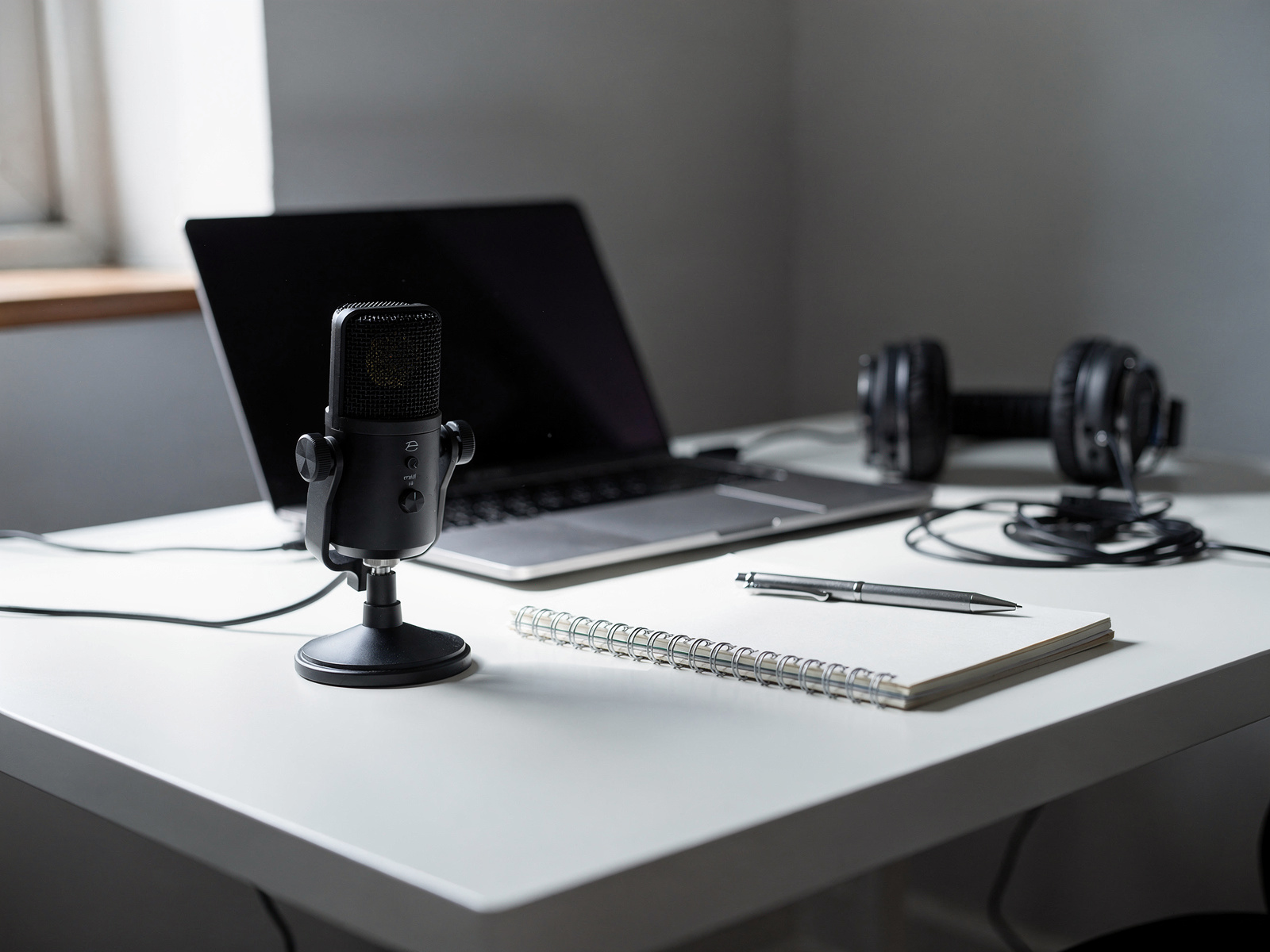
Check Zoom or Teams audio settings before buying
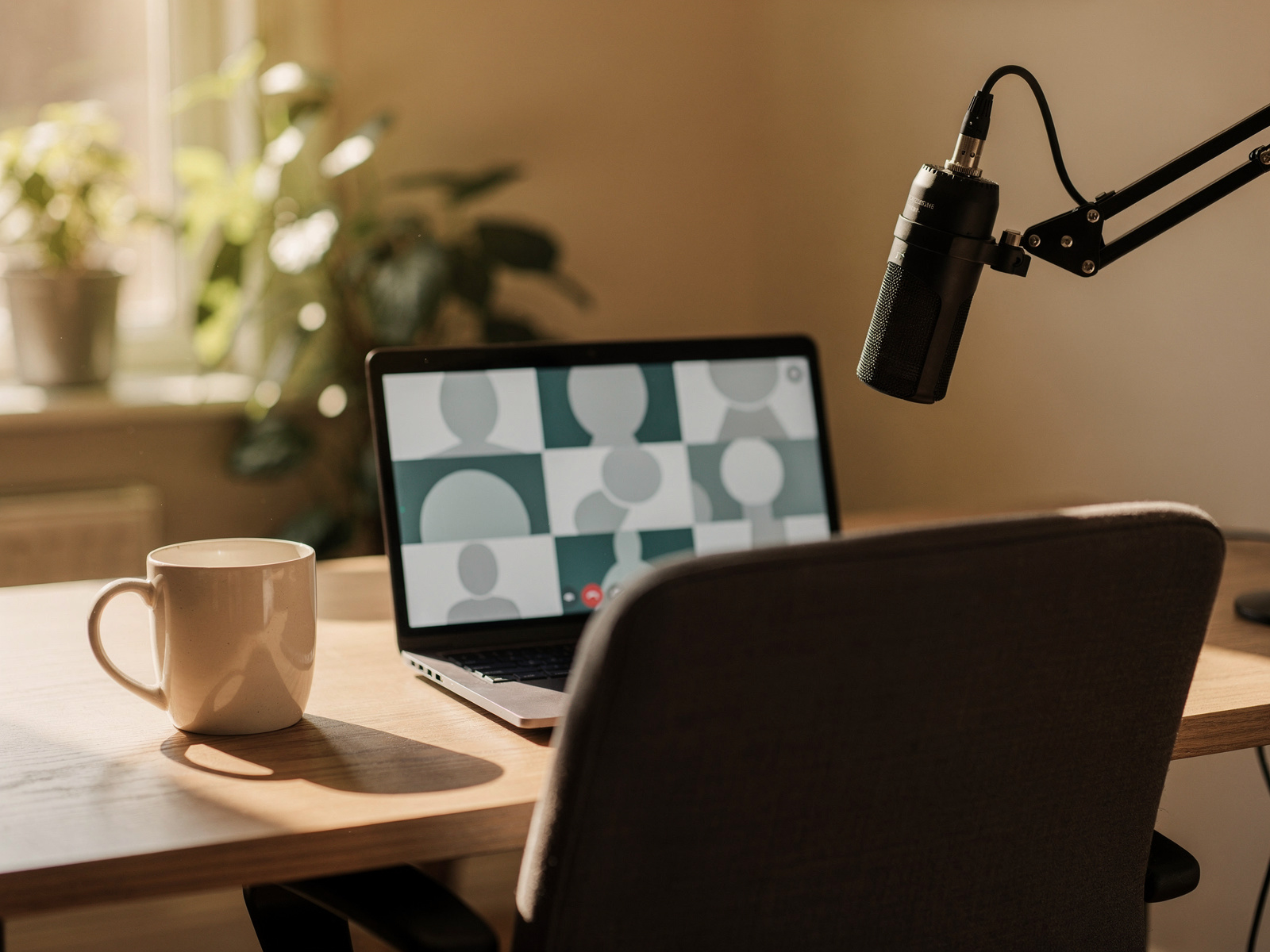
The app already processes your voice
Zoom's default meeting audio applies noise suppression and echo cancellation, and it offers adjustable suppression, voice isolation and original-sound modes. Microsoft Teams likewise has built-in noise suppression and voice isolation. So a more expensive microphone does not deliver its raw studio sound unchanged to everyone on the call.
For ordinary speech, microphone distance, room echo, hardware mute, app settings, keeping speakers away from the mic, a stable network and a consistent level often matter more than exotic recording specs. Several current mics also add onboard processing, such as the Shure MV6 Gen 2 and MV7+ with auto level and denoising, and the Elgato Wave:3 MK.2 with its Wave FX processor.
The picks
1. RØDE NT-USB Mini
Best for small desks. A compact USB condenser mic with a cardioid pattern, a built-in 24-bit/48 kHz interface and a headphone output with direct monitoring. Thomann UK lists it at £75 including VAT, rechecked on 20 Nov 2026, about £83.90 delivered if bought alone because Thomann charges delivery on orders below £149; RØDE sells it direct at £99.99. Watch out for: no XLR output, so no route to a mixer later. Pick it when desk space is tight.
2. Sennheiser Profile USB-C
Best for hardware controls. A condenser mic with a cardioid pattern and hardware controls for mute, gain, headphone volume and mix, plus a metal housing and a table stand. Thomann UK lists it at £75 including VAT, rechecked on 20 Nov 2026 (down from £88 on 10 Nov), about £83.90 delivered if bought alone, the same as the NT-USB Mini. It connects by USB-C. Watch out for: USB-C only, and the table stand is the only mount listed. That makes it the easiest pick if you want to mute immediately without hunting for the Zoom toolbar.
3. Audio-Technica ATR2100x-USB
Best budget dynamic. A dynamic cardioid mic with USB-C and XLR, headphone monitoring, a tripod desk stand, a stand clamp and USB-C, USB-A and XLR cables in the box. CVP lists it at £79 including VAT, available on backorder, rechecked on 20 Nov 2026, and CVP's standard delivery is free on qualifying UK orders over £50, with exclusions for some Highland, island and remote addresses. It fills the gap between a £49 condenser and the £155 Shure MV6 Gen 2, and suits untreated rooms and noisy rooms as the cheaper dynamic option. Check the expected dispatch date, because it is on backorder.
4. Audio-Technica AT2020USB-X
Best for podcast-style recording. A USB large-diaphragm condenser with a cardioid pattern, a converter up to 24-bit/96 kHz, a headphone jack with volume and mix controls and a mute button. Thomann UK lists it at £109 including VAT, rechecked on 20 Nov 2026, about £117.90 delivered if bought alone. Choose it if the same mic will record podcasts and videos. At £109 it costs £60 more than the t.bone bundle and £30 more than the ATR2100x-USB, so it only pays off if you will also record.
5. RØDE NT-USB+
Best for onboard processing. A USB-C condenser with a half-inch capsule, 24-bit/48 kHz conversion and onboard APHEX processing, including a high-pass filter, noise gate and compressor, with a zero-latency headphone output. RØDE says the processing is accessed through its Connect, Central or Reporter apps, so you do use companion software to configure it. Thomann UK lists it at £105 including VAT, rechecked on 20 Nov 2026 (down from £125), about £113.90 delivered if bought alone; RØDE sells it direct at £159.99.
6. Shure MV6 Gen 2
Best for noisy rooms. Shure replaced the original MV6 with the MV6 Gen 2 on 30 September 2026. It is a dynamic cardioid USB-C mic with adjustable auto level mode, an adjustable real-time denoiser, tap-to-mute and headphone monitoring. Thomann UK lists it at £155 including VAT, rechecked on 20 Nov 2026, against Shure's £159 UK list price, with free delivery. Watch out for: Shure sells it as a gaming mic, and there is no XLR output. That puts it about £76 above the ATR2100x-USB, so the extra money buys the adjustable processing rather than XLR.
7. RØDE PodMic USB
Best path to XLR later. A dynamic cardioid mic with USB-C and XLR, built-in DSP and a headphone output. Thomann UK lists it at £149 including VAT, rechecked on 20 Nov 2026, and the order qualifies for free delivery. It suits anyone who may add a mixer later through its XLR connection. Watch out for: at 896 g it needs a proper boom arm or stand, as heavy dynamics like the PodMic USB work best on an arm.
8. Elgato Wave:3 MK.2
Best for streaming and software mixing. A USB condenser with a 16 mm cardioid capsule, 24-bit/48 kHz audio, a Wave FX processor, auto gain, clipguard, tap-to-mute and Wave Link integration. Elgato UK lists the black MK.2 at £139.99, down from £159.99, in stock with free shipping, rechecked on 20 Nov 2026. It is the streaming and software-mixing pick in the table, and its onboard processing is the Wave FX processor. At £139.99 it costs £15 less than the Shure MV6 Gen 2, so choose between them on condenser or dynamic, not price.
9. t.bone SC 420 USB Desktop-Set
Best budget bundle. A plug-and-play USB large-diaphragm mic with a headphone output, mute button, shock mount, pop filter, foam windshield and desk tripod. Thomann UK lists it at £49 including VAT, rechecked on 20 Nov 2026, so about £57.90 delivered. It is the lowest-cost bundle in the table. It records at 16-bit, which matters less for calls than how it handles room echo and how stable the stand is.
10. Shure MV7+
Best premium hybrid for calls and content. The MV7+ is on Zoom's certified hardware list, under its ProMic category, and Shure's UK page also shows a Microsoft Teams badge for it. It is a dynamic cardioid mic with USB-C and XLR, headphone monitoring, auto level, real-time denoising, a touch panel for mute and level, and a digital popper stopper. Thomann UK lists it at £248 including VAT, rechecked on 20 Nov 2026, against Shure's £295 UK list price, with free delivery over £149. That makes it one of the strongest options if you take daily calls and also record podcasts or videos. Watch out for: it is the most expensive pick here.
Wireless alternative for creators who move around
RØDE Wireless GO II is discontinued
RØDE now marks the Wireless GO II as discontinued and points buyers to the Wireless GO (Gen 3). RØDE's UK page lists a dual-channel digital system with up to 260 m line-of-sight range, 32-bit float recording on each transmitter, GainAssist, and use as a USB microphone. UK retailers including Thomann, Andertons and guitarguitar were listing it at roughly £135 to £169 when checked on 19 Nov 2026, so compare prices. This is not a normal desk-call microphone. It suits walk-and-talk video, interviews and mobile filming.
Calls versus content recording
Where this guide stops
For work calls, prioritise placement, hardware mute, room behaviour and conferencing-software processing. For podcasts, videos and voiceovers, add monitoring, onboard processing, raw recording quality and XLR flexibility. If recording is your main use, read the creator guide instead.
How these were picked
This is a research-led buying comparison based on current specs, pricing and use-case fit. For every microphone we looked at its connection, hardware mute, headphone socket, onboard processing, stand and desk footprint, XLR upgrade path, Zoom certification where available, and UK price with delivery. We did not rank microphones by affiliate commission, and prices and stock change often, so confirm each one before buying. We did not compare how the microphones sound, so listen to samples before you decide.
FAQ
What is the best microphone for Zoom and Teams?
There is no single best. The RØDE NT-USB Mini suits a small desk, the Sennheiser Profile USB-C suits easy hardware controls, and the Shure MV7+ suits calls plus podcasting.
Do I need a separate microphone for Zoom calls?
Not if colleagues already hear you clearly. Check your Zoom or Teams audio settings and your placement first.
Is a USB microphone better than a headset for Teams?
A USB mic sounds more natural on a fixed desk. A headset is simpler if you move around or share a noisy room.
What is the best cheap microphone for work calls?
The t.bone SC 420 at £49 is the lowest price, and the Audio-Technica ATR2100x-USB at £79 from CVP is a budget dynamic with USB-C and XLR. Add delivery to the cheapest option.
Is a dynamic or condenser microphone better for Zoom?
A dynamic mic used close to your mouth is often easier in an untreated room, but type alone does not remove noise.
Does Zoom or Teams noise suppression make an expensive mic unnecessary?
It reduces the need for one, because both apps process your audio. A better mic still helps with placement, level and mute controls.
Do I need a headphone socket, direct monitoring or XLR?
Not for ordinary calls. Monitoring matters for recording, and XLR matters only if you plan to add a mixer later.
Is the Shure MV7+ Zoom certified?
Yes. It is on Zoom's certified hardware list under the ProMic category, and Shure's UK page also shows a Microsoft Teams badge.
Is the RØDE Wireless GO II discontinued?
Yes. RØDE directs buyers to the Wireless GO (Gen 3).
Should I buy a boom arm?
Often yes for heavy dynamics like the PodMic USB and MV7+, which work best on an arm.
Sources
Prices, delivery terms and maker claims on this page come from these pages, checked on 20 November 2026:
Verdict
Choose the simplest setup that solves the actual problem. Start with your current headset and your Zoom or Teams settings, then pick the RØDE NT-USB Mini for a small desk, the Sennheiser Profile USB-C for hardware controls, a dynamic such as the Shure MV6 Gen 2 or ATR2100x-USB for a noisy room, and the Shure MV7+ if calls and podcasts share one mic. The biggest reservation is that MyHotips did not compare how these microphones sound, and delivery changes the cost of the cheapest picks. Next step: compare delivered prices and listen to samples before you buy.