



Best Walking Pads UK 2026: 4…

How to Reduce Screen Glare Indoors…

Garden Office Setups for Remote Workers:…

Wellness Gadgets for Home Workers (2026):…

Top 10 Best Wearables for Wellness…

Black Friday Desk Comfort Buys: What…

The Best Desk Stretches for Busy…

Top 10 Ergonomic Office Chairs for…

Sleep Earplugs: Simpler Sleep, Chosen and…

VYVE Health Explained: Can One £16.99…

Sunrise Alarm Clocks Compared: Are They…

Fitbit Edge vs Fitbit Air vs…
Burnout warning signs are easy to miss when tiredness starts feeling normal. You sleep but still feel drained, lose patience faster, avoid tasks you usually handle and stare at the screen as if the cursor personally owes you answers. Busy desk workers often call it “just a busy week” for far too long. The point is not to panic. It is to notice the pattern early, reduce pressure where possible and get proper support if things feel persistent or serious.
Most Relevant Audience
This article is for desk workers, remote workers, freelancers, bloggers, creators, side hustlers and small business owners who feel tired, irritable, unfocused or emotionally drained but keep dismissing it as “just a busy week”. It is especially useful if your work happens mostly through screens, messages, dashboards and long sitting blocks.
Burnout warning signs every busy desk worker should know
Burnout vs normal tiredness
Normal tiredness usually has a clear reason and improves with proper rest, lighter demands or a better night’s sleep. Burnout feels more persistent. The tiredness starts following you across days, tasks and weekends. You may technically stop working, but your system does not feel restored. That difference matters because burnout is not solved by pretending Monday will magically behave better.
Constant exhaustion that rest does not fix
One of the clearest burnout warning signs is exhaustion that does not lift properly. You sleep, take a break or have a quieter evening, yet still wake up feeling heavy. Desk workers may dismiss this because the work is not physically active. Still, mental load, screen fatigue, tension and constant availability can drain energy deeply.
Loss of motivation
Burnout can make normal tasks feel strangely pointless or harder to start. Work you once handled with reasonable effort may now feel flat, irritating or impossible to begin. Motivation does not always disappear dramatically. Sometimes it fades into “I cannot be bothered” when the real issue is that your energy system is running on fumes.
Emotional flatness
Emotional flatness can show up as feeling detached, numb or unusually uninterested in things that normally matter. You may still complete tasks, but everything feels muted. This is different from having an ordinary low-energy day. When emotional flatness sticks around, it is worth treating as information rather than brushing it off as laziness.
Irritability and shorter patience
Burnout can make patience shrink. Small requests feel bigger. Messages annoy you faster. A normal meeting suddenly feels like a personal attack from the calendar. This does not mean you have become a worse person. It may mean your capacity is overloaded, and your nervous system has fewer spare resources for ordinary friction.

The early signs are easy to excuse
Burnout often arrives quietly because each sign can be explained away. One bad night. One busy week. One annoying client. One long meeting day. The pattern matters more than the single moment. When tiredness, irritability, focus problems and dread keep repeating, your body and mind may be asking for change before they have to shout.
How burnout shows up in desk work
Focus problems
Focus problems are common when burnout is building. You may reread the same line, switch tasks constantly or avoid work that needs real thinking. The brain starts choosing shallow tasks because deeper work feels too expensive. That can create a frustrating loop: low focus slows progress, then slow progress increases pressure.
Decision fatigue
Busy desk workers make decisions all day, even when the job looks still from the outside. Reply now or later? Which task first? What needs fixing? Which message matters? Decision fatigue grows when your brain has been sorting small choices for too long. Eventually, even simple decisions can feel weirdly heavy.
Sleep problems and night work thoughts
Burnout can affect sleep by keeping work thoughts active after hours. You may replay conversations, remember unfinished tasks or wake up thinking about tomorrow’s demands. The laptop may be closed, but the mental tabs are still open. If nights stop feeling restorative, that is an important signal.
Physical tension and desk fatigue
Burnout is not only emotional. Desk workers may notice tight shoulders, headaches, jaw tension, eye strain, back discomfort or a heavy, wired feeling after work. A stressful digital day can live in the body. Long sitting, screen fatigue and shallow breathing can make overload feel physical.
Desk work can hide overload
Desk work can make burnout harder to recognise because the strain is often invisible. You are not carrying boxes or running around a shop floor, so the tiredness can seem confusing. Yet your brain, eyes, posture, attention and emotions may still be working all day. Quiet work can still be costly.
Why remote workers can miss the signs
No one sees the strain
Remote workers can look fine while struggling. There may be no colleague noticing the late nights, skipped breaks or shorter patience. Working from home also makes it easier to keep pushing quietly. Without outside signals, you may normalise overload because nobody is there to say, “You seem properly fried.”
Work has fewer edges
When home is also the office, work can leak into evenings, weekends and rest spaces. That makes recovery less complete. A quick message after dinner, one more dashboard check or a half-finished task before bed can keep the workday open. Burnout signs are easier to miss when there is no clear ending.
Side hustles add hidden pressure
Side hustlers often work around another job, family life or study. The pressure can feel optional because the project is self-directed, but the energy cost is still real. If every spare hour becomes a work block, recovery disappears. Ambition needs boundaries if it is going to last.
Small business owners carry everything
Small business owners and freelancers often carry sales, admin, delivery, marketing, support and planning at once. That responsibility can blur into constant mental checking. Even when no single task is huge, the total load can become heavy. Burnout can build from always being the person who has to remember.
Notice the pattern, not just the mood
Everyone has difficult days. The concern is when difficult starts becoming the default. If you are regularly exhausted, cynical, unfocused, tense or unable to recover properly, treat that as a signal. You do not need to diagnose yourself from one article. You do need to stop ignoring the pattern.
What to do when burnout signs appear
Reduce the immediate load
Start by reducing pressure where you can. Move non-urgent tasks, cancel unnecessary meetings, delay low-value admin or simplify the day’s expectations. This may feel uncomfortable, especially if you are used to pushing through. But when capacity is low, pretending nothing needs to change usually makes recovery harder.
Protect real recovery
Recovery needs more than collapsing beside another screen. Try to protect sleep, food, movement, daylight, screen breaks and time away from work messages. Keep it realistic. You are not building a perfect wellness retreat. The goal is to give your body and mind fewer reasons to stay permanently switched on.
Tell someone early
If burnout signs are building, tell someone appropriate before things get worse. That might be a manager, client, partner, friend, mentor or health professional. Naming the problem can reduce the pressure of carrying it alone. You do not need to wait until you completely crash before asking for help.
Rebuild boundaries
Burnout recovery often needs better boundaries around availability, workload and digital noise. Set clearer work hours, batch messages, reduce notifications and stop letting every task behave like an emergency. Boundaries are not a luxury for people with calm lives. They are how overloaded people stop the leak.
Get proper support if needed
If symptoms feel persistent, serious or hard to manage, speak to a qualified health professional or trusted support service. Burnout can overlap with other health issues, stress conditions or life pressures, so proper support matters. An article can help you notice warning signs, but it should not replace personal advice.

Related money note
Better tools can reduce repetitive admin, task switching and avoidable digital friction. Tools do not fix burnout by themselves, but smoother systems can lower the daily load when your business has started asking too much from one tired brain.
Common burnout mistakes
Waiting for a complete crash
Many people only take burnout seriously when they can no longer function normally. That is risky and unnecessary. Early warning signs are there to help you respond sooner. Exhaustion, irritability, poor focus and sleep disruption deserve attention before they become the entire workday.
Calling every symptom laziness
Burnout can look like procrastination from the outside. You avoid tasks, move slowly or struggle to care. The difference is that burnout often comes with exhaustion, overload and reduced capacity. Labelling yourself lazy may add shame without solving anything. A better question is what your routine and workload are demanding.
Recovering with more digital noise
After a draining day, it is tempting to recover with scrolling, streaming, inbox checking or dashboard refreshing. Some of that may feel enjoyable, but it may not help if your burnout signs are tied to screens and constant input. Try adding some recovery that is genuinely quieter.
Keeping the same workload unchanged
Burnout warning signs usually mean something needs adjusting. More sleep helps, but it may not be enough if the workload, expectations and boundaries stay the same. Look for pressure points you can reduce, delegate, delay or simplify. Recovery is harder when the original overload remains untouched.
Related wellness guides
Desk Worker Fatigue
Desk Worker Fatigue is the best next read if you are tired all day but not sure whether it is burnout or desk-based energy drain. It explains how stillness, screens, posture, stress and mental load can make desk workers feel exhausted.
Working From Home Without Wrecking Your Health
Working From Home Without Wrecking Your Health is useful if burnout signs are connected to long sitting, weak boundaries, screen fatigue and always-on work. It covers practical ways to make remote work less physically and mentally expensive.
Notification Burnout And How To Take Back Your Focus
Notification Burnout And How To Take Back Your Focus helps if constant alerts, messages and app badges are fragmenting your attention. Reducing digital interruptions can make recovery easier because your focus stops being pulled apart all day.
How To Build A Healthier Work-From-Home Routine
How To Build A Healthier Work-From-Home Routine is the broader follow-up if your day needs better movement, screen breaks, planning, boundaries and shutdown habits. A healthier routine cannot solve everything, but it can reduce repeated daily strain.
FAQ
What are the early warning signs of burnout?
Early burnout warning signs can include constant exhaustion, reduced motivation, irritability, cynicism, poor focus, decision fatigue, sleep disruption, physical tension and feeling emotionally flat. The pattern matters. If these signs keep repeating and rest does not help much, it is worth taking them seriously.
How do I know if I am burned out or just tired?
Normal tiredness usually improves with rest, a lighter day or better sleep. Burnout tends to feel more persistent and may affect motivation, patience, focus and emotional energy. If tiredness keeps returning, feels hard to recover from or affects daily life, consider speaking to a qualified professional.
Can desk work cause burnout?
Desk work can contribute to burnout when it involves high demands, constant messages, long screen time, weak boundaries, emotional pressure and too little recovery. The job may look physically quiet, but the mental and digital load can still be heavy, especially for remote workers and small business owners.
Why do remote workers feel burned out?
Remote workers can feel burned out because work and home boundaries blur. Messages, meetings, notifications and unfinished tasks can follow them through the whole day. Without a commute or clear shutdown, work may stay mentally open, making rest feel less complete.
What should I do if I notice burnout symptoms?
Start by reducing pressure where possible, protecting real recovery and telling someone appropriate. Review workload, boundaries, notifications and sleep. If symptoms feel persistent, serious or difficult to manage, seek support from a qualified health professional or trusted support service.
Final verdict
Burnout warning signs help busy desk workers notice overload early. Constant exhaustion, shorter patience, emotional flatness, focus problems, sleep disruption and physical tension are not signs to ignore just because the work happens at a desk.
You do not need to wait until you completely crash. Notice the pattern, reduce pressure where possible, protect recovery and get proper support if symptoms feel persistent or serious. Burnout is easier to respond to early than recover from late.
The burnout warning signs to act on are rest that no longer refills you, feeling detached, shorter patience and struggling to start tasks. Do not wait for a crash: cut one pressure, tell someone you trust, and see a GP if daily life is affected.
Checked: November 2026. Research-based, not hands-on, and not medical advice.
Quick Overview
- Burnout can build slowly, so it is easy to miss.
- Stress feels like too much; burnout, like nothing left.
- The mental load at home counts, even unseen.
- Cut one pressure this week, not everything at once.
- A GP or NHS Talking Therapies can help.
- Samaritans listen day and night on 116 123.
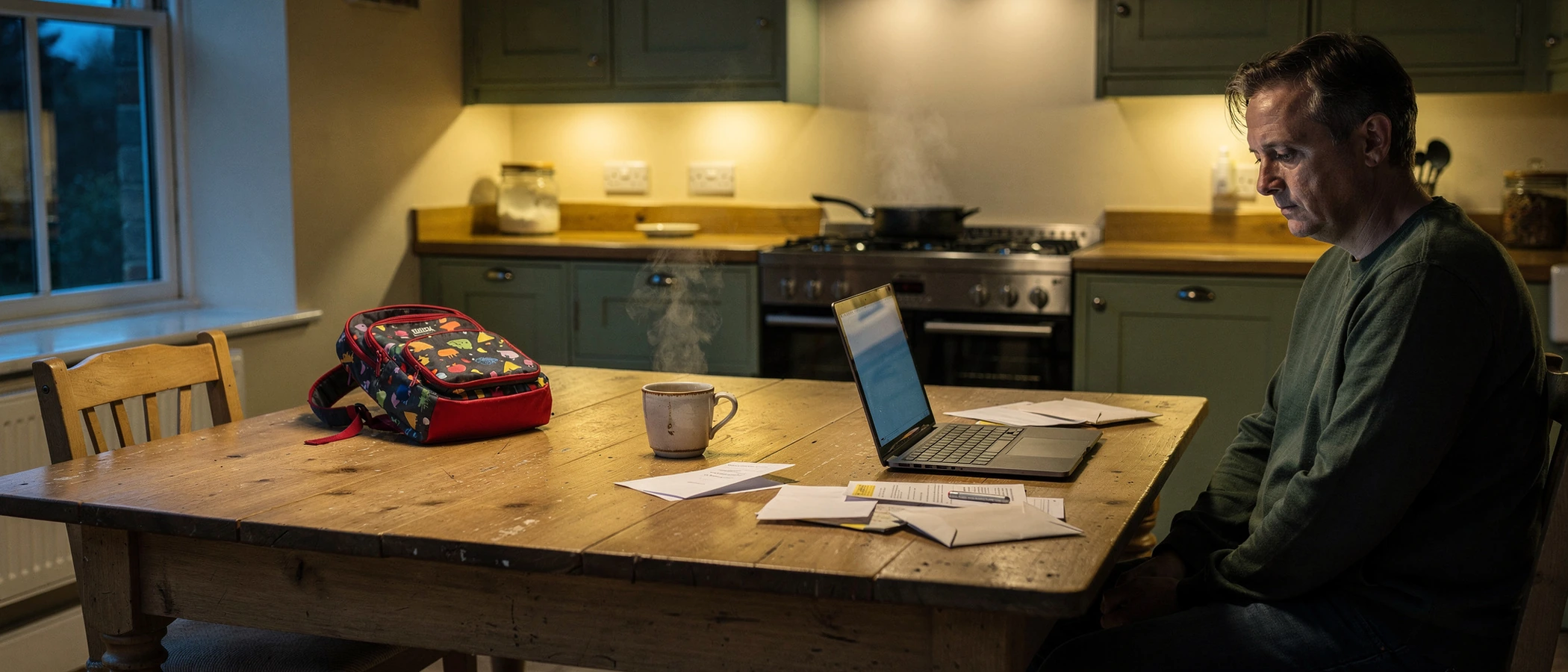
When a Busy Week Stops Ending
Half Past Six at the Kitchen Table
The laptop is shut, but you are still drafting a reply in your head. The pasta is boiling over, someone needs a form signed, and you have just remembered the washing. You slept last night. You still feel as if you did not.
One evening like that is ordinary life. Weeks of them deserve a closer look, because "just a busy week" can quietly turn into the way every week feels.

Tired, Stressed or Burning Out?
A Rough Guide
NHS Every Mind Matters says stress often feels like too much, while burnout can feel like you have nothing left to give. Mind notes that burnout is not technically a mental health diagnosis; the word describes a collection of symptoms. The stress and burnout columns below draw on NHS guidance; the tiredness column is a general comparison. Use the table to start thinking, not to label yourself.
| What to compare | Ordinary tiredness | Stress | Burnout |
|---|---|---|---|
| How it can feel | Worn out after a long day | Too much to handle | Nothing left to give |
| What you might notice | A clear, recent cause | Worry, overwhelm, poor focus | Drained, detached, unmotivated |
| A first step | Rest and a lighter day | Name the causes you can change | Reduce the load and ask for help |
Burnout Warning Signs to Notice
Rest Stops Refilling You
You take the evening off, or even a whole weekend, and Monday arrives with the battery still low. NHS Every Mind Matters lists feeling tired and drained among the signs of burnout. Desk work can make this confusing, because you have barely moved. Your attention, though, may have been working all day.
You Feel Detached or More Negative
Work you used to care about starts to feel flat. You may feel helpless, cynical or strangely numb, and find yourself pulling away from colleagues or friends. The NHS page names losing motivation, detachment, negativity and withdrawing from others. If "what is the point?" has become a regular thought, treat it as information, not laziness.
Small Things Feel Enormous
A short message reads like a complaint. A simple choice takes ten minutes. You reread the same line, avoid the task that needs real thought and answer easy emails instead. Struggling to get things done is one NHS burnout sign. The NHS stress page also lists irritability, poor concentration and difficulty making decisions.
Your Body and Sleep Join In
Changes to sleep or appetite can be part of burnout. Stress can also show up as headaches, muscle tension, stomach problems or a faster heartbeat, and some people drink or smoke more. These symptoms can have other causes, so mention them to a GP. Do not assume that chest pain is only stress; get medical advice, and call 999 in an emergency.
The Mental Load Nobody Sees

The Invisible Work of Home Life
Mental load is the remembering, noticing, planning and tracking behind an ordinary home: meals, bills, school messages, appointments, medication, lifts and the milk that is nearly gone. Doing each job is only part of it. The tiring part is often carrying the knowledge that every job exists, including during a meeting.
For parents and carers, that second shift does not pause because a deadline has arrived.
When Work and Home Blur
At home, everything is close enough to notice. You sit down to write and see the dishes. An email lands while you are thinking about the washing. After dinner, the laptop on the table asks for one more look.
Each switch is small. Together they can leave you never quite working and never quite off. Rest turns into standby, with part of your mind still watching both jobs.
What to Do When the Signs Appear
Get the Open Loops Out of Your Head
Write every unfinished job in one place, split into work and home. Add who else could do each one. A shared household list makes unseen work visible, which makes it easier to divide. Some people like journaling too: a few lines of writing at the end of the day for reflection, with no need for neat sentences or clever writing prompts.
Cut One Pressure This Week
Work out what is driving the strain, then start with something you can change. Move a deadline, decline a meeting, hand over a household job or lower the standard on a task that does not matter. NHS advice is to focus on what you can change. One real reduction beats a grand new routine you have no energy to keep.
Give Work an Edge
The NHS suggests boundaries such as switching off work notifications outside working hours and separating your workspace if you work at home. During the day, protect one block for focus and let home jobs wait on their list. Headphones can help signal quiet time in a shared home, but free steps, such as a closed door or an agreed signal, are worth trying first.
Stop on Time and Use Your Leave
Mind’s advice on burnout while working from home includes finishing on time most days, using your annual leave, protecting your sleep, booking in things you enjoy and asking for help early. Pick a stop signal: write tomorrow’s first task, close the laptop and put it out of sight.

Make Some Recovery Task-Free
Recovery should not become another job to optimise. The NHS suggests short breaks, walks and stretches, and breathing exercises. A screen-free break can be as plain as sitting with a cup of tea, cooking slowly or filling in a colouring book. Choose a quiet activity with nothing to finish and nobody to reply to.
Talking to Someone at Work
What Your Employer Should Do
HSE says employers have a legal duty to assess stress risks to your health and share the results. That covers home workers too. HSE also tells employers to encourage breaks and leave, and not to expect out-of-hours email replies.
Raise problems early, with examples. If your manager is the pressure, check workplace policies, then try HR, a union representative, an assistance service or a mental health first aider.

If You Work for Yourself
No manager will spot it for you. Tell a partner, friend or fellow freelancer what has changed. Look at what can be moved, priced differently, handed over or politely refused, and ask a client for more time before you miss the deadline.
Where to Get Help in the UK
See a GP or Try Talking Therapies
Speak to a GP if you are struggling to cope, self-help is not working or burnout is affecting your daily life. In England, adults aged 18 or over can refer themselves to NHS Talking Therapies without seeing a GP first, and some areas accept 16 and 17 year olds. Elsewhere in the UK, ask your GP what is available.
Read the NHS Every Mind Matters page on work-related stress and Mind’s guide to burnout when working from home.
If You Need Help Now
See the urgent mental health help page for full NHS details. In short:
- Call 999 or go to A&E if a life is at risk, or you cannot keep yourself or someone else safe. Do not drive yourself there.
- In England, call NHS 111 and choose the mental health option for urgent help. Elsewhere, check your local NHS service.
- Call Samaritans free on 116 123, 24 hours a day, every day of the year.
FAQ
What are the early warning signs of burnout?
Early signs can include feeling drained, losing motivation, feeling detached or more negative, withdrawing, struggling to get things done and changes to sleep or appetite. It can build gradually, so look for a pattern over several weeks rather than judging one bad day.
How is burnout different from stress?
In the NHS description, stress often feels like too much, while burnout can feel like having nothing left to give. Burnout can develop from long-term stress and may involve feeling empty, exhausted and detached. The two can overlap, so ask for help if you are unsure.
Can working from home cause burnout?
It can contribute, especially when work has no clear finish and home jobs interrupt it all day. Notifications, a laptop left in view and unshared household planning can all squeeze out recovery. Home working also suits many people, so look at your own pattern and pressures.
What is mental load?
Mental load is the unseen work of remembering, planning, noticing and managing what needs doing. At home it might cover meals, bills, appointments, school messages and care. It can feel heavy even while you sit still, because your attention keeps tracking unfinished jobs.
Final Verdict
Notice the Pattern, Then Act
If rest has stopped helping and work or home feels like more than you can give, take it seriously now. Choose one pressure to reduce, tell one person and set a firm end to today’s work. A checklist cannot diagnose you, so see a GP if daily life is affected, and use the urgent contacts above if you cannot wait. For next steps, read the Work-Life Balance guide.


