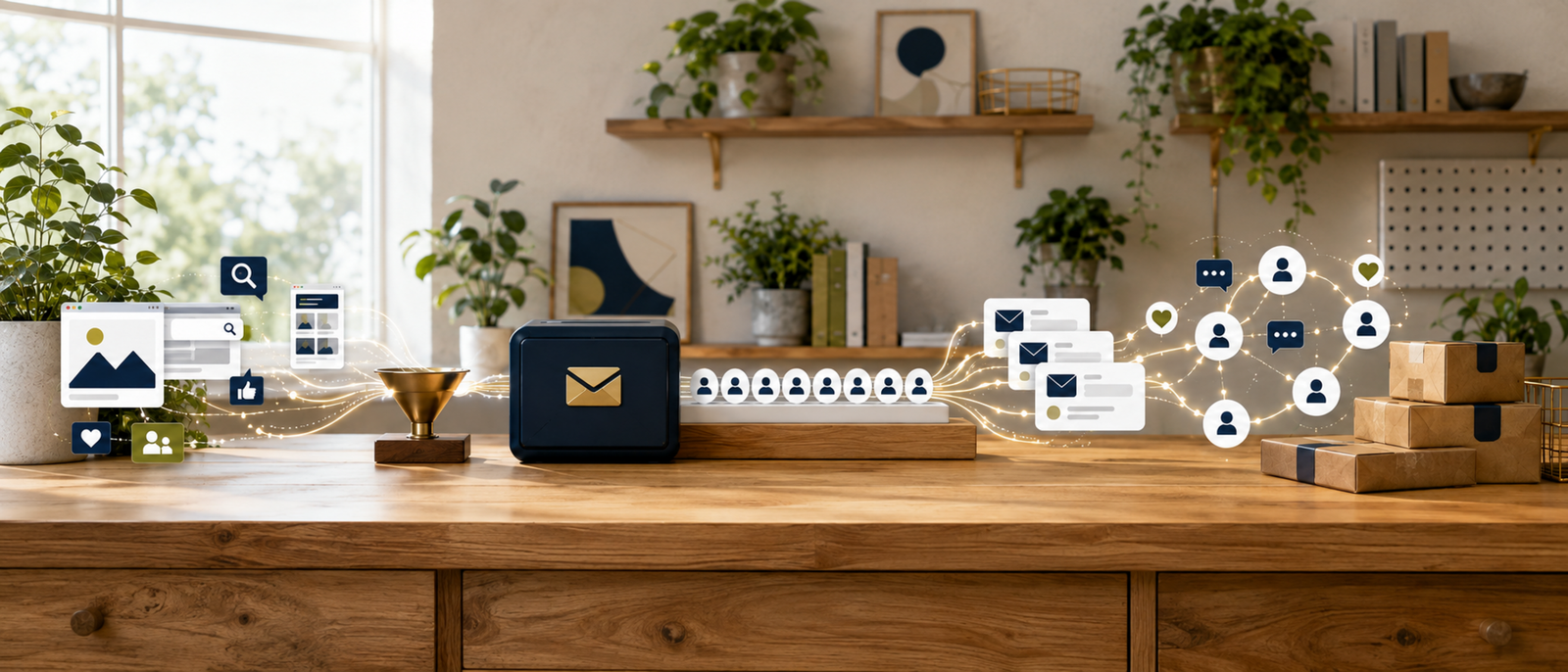
MyHotips started because a lot of us were trying to build something online from a spare room, and kept being told the answer was more followers. Followers are lovely, but you are borrowing them. One algorithm change and the people who liked your work last month never see it again. The Money Growth side of the site is about income that lasts, and for most small businesses that starts with an email list.
Online Marketing covers email, newsletters, landing pages, funnels and automation: the quiet systems that turn a passing visitor into a reader, and a reader into a customer. We start with the simple, free or cheap version of each, then point you to the tools worth paying for once they genuinely save you time.
Related guide: Top 10 email tools for bloggers
Quick Overview
In this guide:
This page is the map. Each article linked below goes into one piece in more detail.
Start Here
New here? These are the articles we would read first: the basics, then the tools.
Why Email Still Matters
You Own the List
Social platforms decide who sees your posts. Your email list does not come with that catch.
If a platform changes its rules, closes your account or simply goes out of fashion, your subscribers are still yours to contact.
That is why so many small businesses treat the list as the main home, and social media as the shop window.

Regular, Welcome Contact
Email lets you turn up in someone’s inbox on a schedule that suits you both, whether that is weekly, fortnightly or monthly.
People hear from you without having to remember to visit your site or catch the right post at the right moment.

Visitors Become Subscribers
Most website visitors read one page and leave. A simple sign-up box gives the interested ones a way to stay in touch.
Someone who chose to join your list is already interested, so they are far more likely to read, reply and eventually buy.
Related guide: SEO explained, for getting those visitors in the first place

A Long-Term Asset
Trust builds slowly. A list lets you have an ongoing conversation rather than a single visit.
Over time, that conversation is what turns into enquiries, orders and repeat customers, long after the original blog post has slipped down the search results.
Related guide: Affiliate email funnel blueprint

Email Platforms Worth Knowing About
Kit (formerly ConvertKit)
Kit, which was called ConvertKit until 2024, is popular with bloggers and creators who want a list that grows alongside their content.
It keeps things fairly simple, with tags and visual automations that are easy to follow once set up.
Full review: Kit review
beehiiv
beehiiv is built for people whose newsletter is the main product, rather than a side channel.
It focuses on publishing, growth tools such as referrals, and ways to earn from the newsletter itself.
Full review: beehiiv review
GetResponse
GetResponse combines email with landing pages, automation and simple funnels in one place.
That suits small businesses that would rather not stitch three separate tools together.
Full review: GetResponse review
ActiveCampaign
ActiveCampaign is the one to look at when your automations get detailed: different paths depending on what people click, buy or ignore.
It takes longer to learn, so it makes most sense once a simpler tool is clearly holding you back.
Full review: ActiveCampaign review
How the Pieces Fit Together
A Good Reason to Sign Up
A lead magnet is something useful people get in return for their email address.
Popular examples:
The best ones solve one small, specific problem quickly, and lead naturally to what you sell.

Landing Pages and Funnels
A landing page is a single page with one job, usually getting someone to sign up or buy. A funnel is simply the series of steps after that: the thank-you page, the welcome emails, the offer.
Start with one landing page and one offer. You can build more elaborate funnels later if the simple version works.
Related guide: Best funnel builders for beginners

Automated Welcome Emails
When someone joins, a short series of automatic emails can say hello, deliver what you promised and introduce your best work.
You write it once and it keeps working while you get on with everything else.
Related guide: Email marketing and automation explained

Sending the Right Emails to the Right People
Segmenting means grouping subscribers by what they are interested in, such as video, reading or shopping, so they get emails that are relevant to them.
Even two or three simple groups usually mean more opens and fewer unsubscribes.
Related comparison: Kit vs ActiveCampaign

Do You Need a Funnel Builder?
Probably not on day one. Most email platforms now include sign-up forms, simple landing pages and welcome automations, which is plenty for a new list.
A dedicated funnel builder or all-in-one platform starts to make sense when you sell several products, run webinars or courses, and are tired of connecting separate tools. At that point, one monthly bill can work out simpler than four.
Related guide: Best marketing automation platforms
Making Sure Your Emails Arrive
The best email in the world does nothing in a spam folder. Set up your sending domain properly (your email platform will walk you through it), keep your list clean, and write subject lines that sound like a person rather than a sales flyer.
In the UK, the PECR rules generally mean you need people’s consent before sending them marketing emails, so use a clear sign-up form and make unsubscribing easy. The Information Commissioner’s Office (ICO) has plain-English guidance for small businesses.
Related guide: Email deliverability tools: free checks first
Final Thoughts
MyHotips started because building something online should not depend on the mood of an algorithm. Online Marketing is where we look at the systems that let you keep in touch with the people who are interested in your work.
Start small: one sign-up form, one useful freebie, a short welcome sequence and an email you send regularly. That simple setup beats a complicated funnel you never finish building.
Add tools only when they save you real time, keep an eye on the monthly bill, and remember that a smaller list of people who open your emails is worth far more than a big one that ignores them.
FAQ
What does Online Marketing cover?
Email, newsletters, landing pages, funnels and automation. Website building and SEO live in Websites & SEO, and selling platforms in Selling Online.
How do I start an email list?
Pick a platform with a free or low-cost starter plan, add a sign-up form to your site, offer something useful in return, and set up a short welcome email.
Are email platforms expensive?
Many have free plans for small lists, and costs usually rise with the number of subscribers. Check what happens to the price as your list grows before you commit.
How long does it take to grow a list?
It depends on your traffic and how useful your sign-up offer is. Steady, regular effort usually beats short bursts of promotion.