MyHotips started because a lot of us were building something from home and quietly forgetting to stop. The laptop lives on the kitchen table, the inbox lives in your pocket, and “I will just finish this” somehow turns into 9pm on a Tuesday. The Money Growth side of the site helps you build the work. This side helps you put it down again.
Work–Life Balance covers boundaries, rest, routines, planning your week, getting things done without running yourself ragged, and spotting burnout before it spots you. No perfect morning routine required. Whether you work from a garden office or a corner of the spare room, both count.
Related guide: Work–life balance: what it really means

Quick Overview
In this guide:
Start Here
New here? Start with these: the free fixes first, then the apps.
Why Balance Feels Harder at Home
Work Is Always in Your Pocket
Your phone carries the whole office around with you, including to the sofa and, if we are honest, the bathroom.
Messages and updates arrive whenever someone else is working, which is not always when you are.
Being reachable is useful. Being reachable at 10pm on a Sunday is a habit, not a job requirement.

Related guide: Digital boundaries for side hustlers and home workers
The Home Becomes the Office
No commute means no natural full stop. The kitchen table does the day job and then has to become a dinner table again.
Without some kind of edge, work slowly spreads into rooms and hours that used to be for resting.

Related guide: How to stop your home office taking over your home
The To-Do List That Never Ends
When you work from home, or for yourself, there is always one more thing you could be doing.
A list with no end makes every evening feel like unfinished business, even after a good day.
The fix is not a better list. It is deciding what counts as done for today.
Related guide: When your side hustle starts affecting your health
Rest That Comes With Guilt
Lots of us only feel allowed to rest once everything is finished, which is a lovely idea that never actually happens.
Rest is part of the work, not a prize you earn after it.
Related guide: Rest without guilt when you run your life from a laptop
What Work–Life Balance Actually Looks Like
Balance is not a perfect 50:50 split, and it is not working less for the sake of it.
It is a pattern you can keep up: enough focus to get the important things done, and enough rest that you still like your life on a Wednesday.
Some weeks will lean towards work. That is fine, as long as the next one leans back.
In practice, it usually comes down to three things:
Get those roughly right and everything else becomes easier to manage.
Related guide: Mental load and burnout when work and home blur together
Habits That Keep Work in Its Place
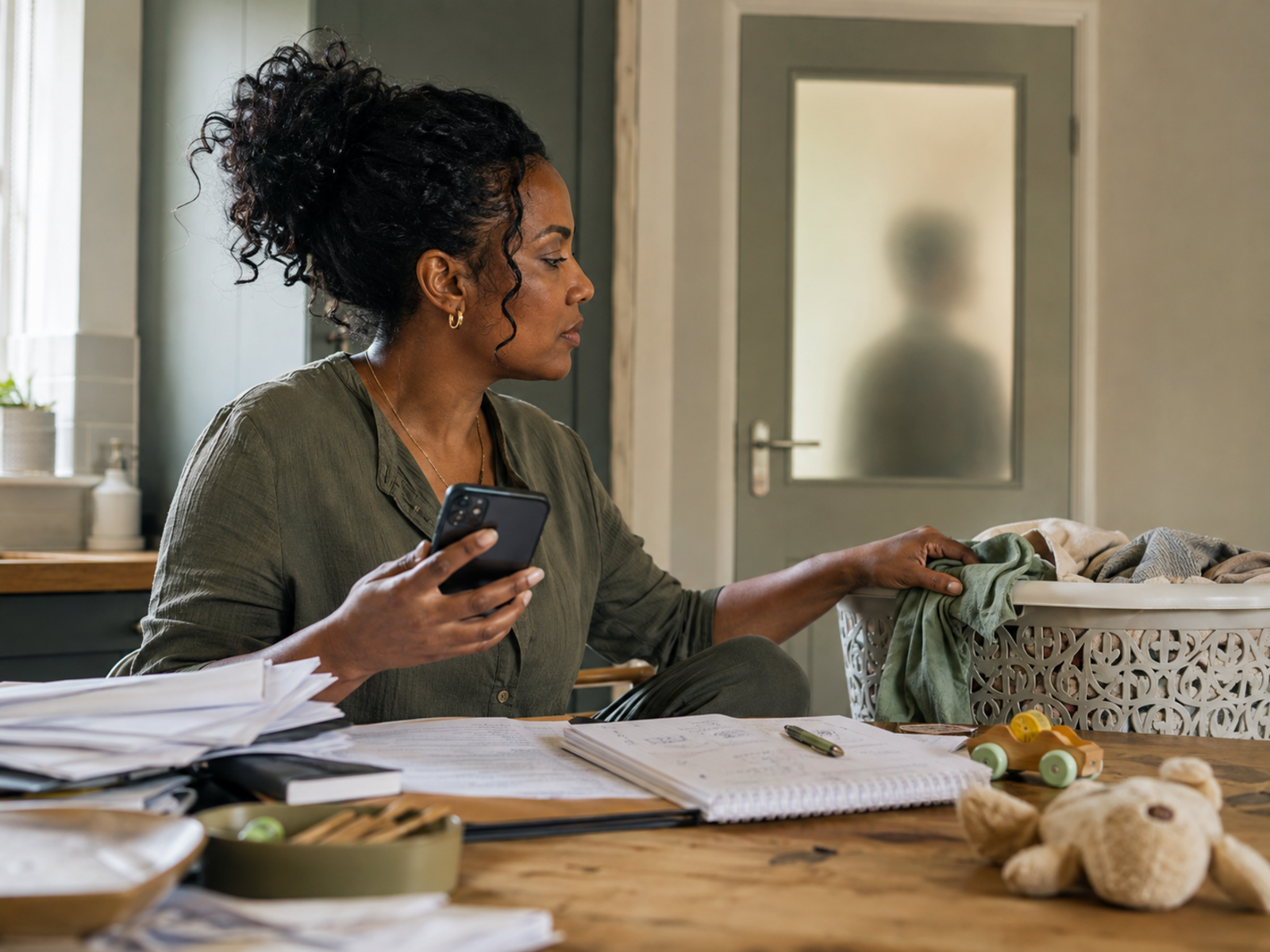
Clear Work Boundaries
Boundaries only work if other people know about them, and if you keep them too. Annoyingly, the second part is harder.
A few that tend to stick:
Helpful guide: Work-from-home boundaries that actually stick
Start and End the Day on Purpose
A short routine at each end of the day does the job a commute used to do.
Five minutes to write the top three jobs for tomorrow, then closing the laptop lid, tells your brain the shift is over.

Related guide: The best end-of-day reset for desk workers
Plan the Week, Not Just the Day
Good productivity is about doing the right few things, not cramming in more.
What helps:
Related guide: Calendar blocking for burnout prevention
Make Time for People
Working from home can be lonely in a way that sneaks up on you. A week of only talking to your laptop is a long week.
Put something social in the diary, even if it is only cooking with friends or a call with someone who makes you laugh. Phones in a drawer optional, but recommended.
Related guide: Social reset: small plans for home workers

Small Systems That Make Balance Easier
Task Apps That Calm the Chaos
A good task app gets the list out of your head and somewhere you can see it.
Start with a free one. If you spend more time organising the app than doing the tasks, it is not helping.
App guide: Task management apps and the busy brain
Habit Trackers
Tracking a couple of small habits, like a proper lunch break or a set finish time, shows you how your weeks really go.
Keep it to two or three. A tracker with twenty boxes is just another to-do list.
App guide: Best habit tracking apps for wellness
Lunch Away From the Desk
Eating lunch somewhere other than your desk is the smallest boundary there is, and one of the easiest to keep.
Put your phone on Do Not Disturb for that half hour. For more on taming notifications and email, see our Screen & Inbox Stress guide.
Notice When You Need a Break
The World Health Organization describes burnout as exhaustion, feeling negative or distant about work, and getting less done than usual.
If stress is affecting your daily life, the NHS suggests talking to a GP, and its Every Mind Matters site has free tips for coping.
Related guide: Burnout warning signs every busy desk worker should know
Final Thoughts
MyHotips exists because building an income from home should not cost you your evenings, your weekends or your sense of humour.
Work–life balance is not a reward for when everything is finished. It is what lets you keep going long enough to finish anything at all.
Pick one boundary this week, perhaps a set finish time, and protect it like a meeting with your favourite client.
If stress or low mood is affecting your daily life, the NHS suggests speaking to a GP. You do not have to wait until it feels serious.
FAQ
What does Work–Life Balance cover?
Boundaries, rest, routines, planning, getting things done without burning out, and spotting burnout early. Sleep and food live in Sleep, Food & Movement, and notifications and email in Screen & Inbox Stress.
Why is balance harder when working from home?
Home removes the natural edges of the day, such as the commute and leaving the office. You have to build those edges back in, with set hours and small routines.
How do I stop working in the evenings?
Pick a finish time, end the day with the same short routine, and take work apps off your phone after hours. It feels odd for a week, then it feels normal.
How do I know if I am heading for burnout?
The World Health Organization lists exhaustion, feeling negative about work and getting less done as the main signs. If that sounds familiar and it is not easing, the NHS suggests talking to a GP.






